For Khin July Win Thant, protecting water has never been just an engineering challenge - it is a commitment to the communities that depend on clean and reliable drinking water every day.
Her journey began long before her PhD at Charles Sturt University. Working as an environmental engineer and researcher in Southeast Asia, she saw how declining water quality placed increasing pressure on water utilities and affected people's daily lives. Those experiences inspired her to pursue research that could provide practical solutions to one of the growing environmental challenges of our time.
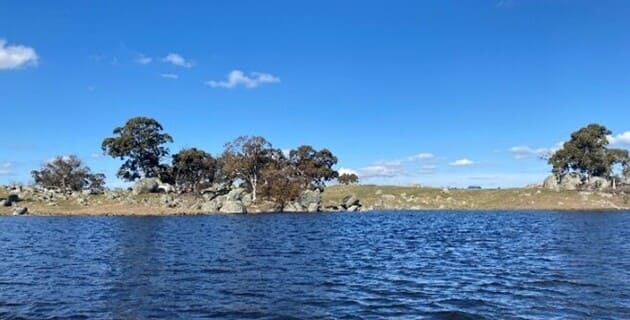
Climate change is changing the way reservoirs behave. During warmer months, water separates into distinct layers, preventing oxygen from reaching the bottom. As oxygen levels fall, nutrients and metals are released from the sediments, reducing water quality, increasing treatment costs and threatening aquatic ecosystems. Many drinking water reservoirs around the world now face this challenge, yet practical and energy-efficient management strategies remain limited.
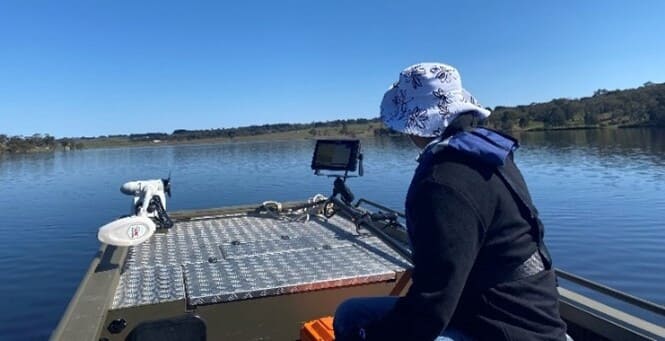
Khin's PhD research focuses on understanding and addressing this problem using Oberon Reservoir in New South Wales as a real-world case study. Rather than relying on trial-and-error in the reservoir itself, she developed a three-dimensional computer model that recreated how water moves, mixes and changes throughout the year. Years of field monitoring data were combined with advanced numerical modelling to test different aeration strategies safely and efficiently. The research compared conventional continuous aeration with an innovative solar-powered system designed to improve deep-water oxygen levels while reducing energy use.

The findings showed that restoring oxygen to the bottom layer of the reservoir can significantly improve water quality by reducing the release of nutrients that contribute to algal blooms and other water quality deterioration. Just as importantly, the research demonstrated that renewable energy can provide many of these benefits with substantially lower energy consumption than conventional approaches. This balance between environmental protection and operational efficiency offers water managers a practical pathway for adapting reservoirs to a changing climate.
The research fills an important gap by integrating reservoir hydrodynamics, water quality processes, engineering design and renewable energy into a single decision-support framework. Conducted with the guidance of her supervisors and research collaborators at Charles Sturt University, the project has produced peer-reviewed journal publications and practical knowledge that can support future reservoir management in Australia and internationally.
The potential impact extends well beyond Oberon Reservoir. Water utilities can use these findings to improve reservoir operations, reduce treatment costs and lower carbon emissions. Communities benefit from safer and more reliable drinking water, while healthier reservoirs provide stronger protection for freshwater ecosystems and biodiversity. By demonstrating how engineering innovation can support both environmental sustainability and economic efficiency, the research contributes to building climate-resilient water infrastructure.
Khin hopes to continue this work by combining environmental monitoring, numerical modelling, renewable energy and artificial intelligence to develop smarter reservoir management systems. Her goal is simple but ambitious: to help ensure that future generations inherit reservoirs that continue to provide clean, safe and sustainable drinking water in an increasingly uncertain climate.
Associate Professor Lalantha Senevirathna, Professor Lee Baumgartner, Associate Professor Peter Thew and Dr Joe Pera
Thant, K. J. W., Thew, P., Pera, J., Baumgartner, L. J., & Seneviratha, L. (2025a). Climate Driven Intensification of Stratification and Hypolimnetic Deoxygenation in Oberon Reservoir: A Decadal Analysis. Science of Total Environment.,https://doi.org/10.1016/j.scitotenv.2026.181490
Thant, K. J. W., Thew, P., Pera, J., Baumgartner, L. J., & Seneviratha, L. (2025b). A Critical Review of Artificial Destratification Systems F]for Mitigating Water Stratification. Environmental Advances, 21. https://doi.org/10.1016/j.envadv.2025.100649
Thant, K. J. W., Thew, P., Pera, J., Baumgartner, L. J., Dallimore, C., & Seneviratha, L. (2026a). Engineering Evaluation of Hypolimnetic Aeration Using AEM3D for Water Quality Improvement in a Stratified Drinking-Water Reservoir. Journal of Water Process Engineering. (Under Review)
Thant, K. J. W., Thew, P., Pera, J., Baumgartner, L. J., & Seneviratha, L. (2026b). Spatially Resolved Thermal Chemical Stratification and Water Quality Risk in a Temperate Drinking-Water Reservoir. Journal of Hazardous Materials. (Under Review)
Charles Sturt University aligns our research, policies, procedures, and other work with the UN Sustainable Development Goals (SDGs). These are the most relevant SDGs for this initiative.