More than 3 million Australians provide unpaid care for family members and friends, yet carers often lack public recognition and institutional support. This gap is the focus of PhD researcher Dalanglin Dkhar, whose creative practice research uses documentary filmmaking to illuminate carers’ lived experiences.
Titled Interpreting the carer story in Unconditional: a social impact film, the project combines academic inquiry with creative storytelling through the documentary Unconditional. Dkhar brings both filmmaking expertise and lived experience as a full-time carer for her son, providing an informed perspective on the complexities of caregiving.
Her advocacy helped establish a partnership with Carers ACT, which funded the film’s production, premiere, website and ongoing advocacy initiatives. Dkhar’s intersecting roles as carer, researcher and filmmaker also shaped the study’s ethical framework and methodology.
The research explores the lived experience of lifelong carers and the potential of documentary film to communicate and deepen understanding of those experiences. It highlights carers not only as providers of support, but as agents of resilience, activism and advocacy. The project also demonstrates documentary film’s potential as a research tool that can translate complex lived experiences across community, academic and policy settings.
Unconditional has been screened at federal government departments and organisations nationwide, supporting conversations about carer awareness, workplace flexibility and community support. It is now part of the Australian Public Service Commission’s learning platform for carer awareness and the HCS111 Introduction to Human Services curriculum at Charles Sturt University. More than 22 media interviews have further amplified carers’ voices.
The documentary has also received international recognition, including selection for the 2024 Indian Film Festival of Melbourne and honours at social impact and short film festivals in the United States and Europe. It is listed on Documentary Australia’s DocAccess directory.
Dkhar now plans to expand educational resources linked to the film, sustaining momentum for systemic change and greater recognition of carers across Australia.
Dalanglin has completed her degree at Charles Sturt University and her university email account will close permanently on 30 July.
She can be contacted at dalangdk@yahoo.com or 0426 872 830.
Supervisors: Dr Monica Short, Dr Emma Rush and Professor Eleanor Gates-Stuart
Faculty: Arts and Education
School: School of Social Work and Arts
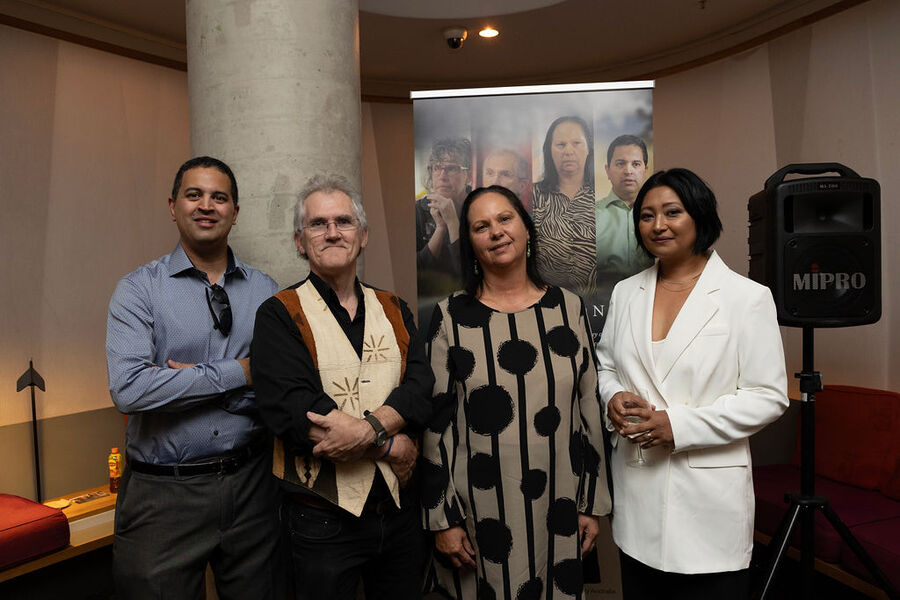
The premiere of Unconditional at Palace Electric Cinema in Canberra, with participant-collaborators Razi Husan, Craig Cormick, Deborah Eades and Dalanglin Dkhar. The location photograph is credited to Newcast Studios and the premiere photograph to Plum Photography.
Charles Sturt University aligns our research, policies, procedures, and other work with the UN Sustainable Development Goals (SDGs). These are the most relevant SDGs for this initiative.